Leave management software case study
How Agility Innovations Cut Leave Approval Time from 3 Days to 4 Hours
An 80-person technology company replaced shared leave spreadsheets and WhatsApp approvals with online requests, live manager approvals and real-time leave balances.
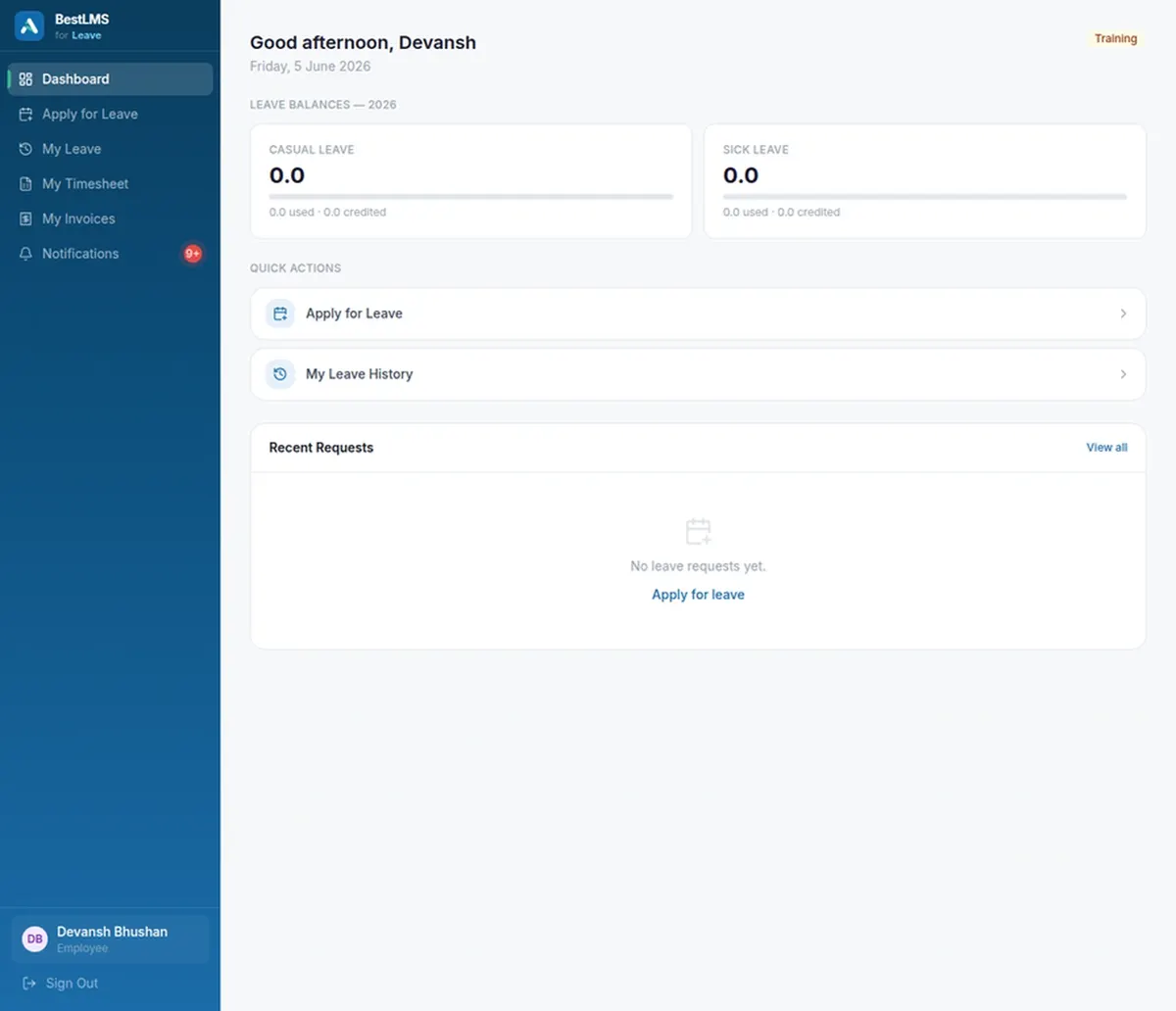
What changed, concretely
- Leave balances visible to every employee without asking HR
- Requests validated against policy before a manager ever sees them
- Approvals in one click from an email alert, on any device
- Declines carry a reason the employee sees immediately
- Casual, sick and earned leave accrue automatically to policy
- Team view shows who is in, on leave, or working from home
- Every decision recorded with who, what, when and why
What was slowing leave approvals down?
Leave lived in two places that never agreed with each other: a shared spreadsheet holding balances, and WhatsApp threads holding the actual approvals. An employee asking for three days off had no reliable way to check what they had left, so they asked HR. A manager approving that request had no record of it beyond a chat message that scrolled away. When the same question came up two months later, nobody could answer it without reconstructing history from memory. The three-day approval time was rarely anyone deciding slowly. It was the request sitting unseen in a thread, then waiting on a balance check, then waiting again for someone to write the outcome down. Every step depended on a person remembering to do it, and the record that survived at the end was whatever the spreadsheet happened to say.
How does BestLMS cut approval time to hours?
The request stops being a message and becomes a record. Employees submit through a guided form that validates dates against their actual balance before submission, so requests that would breach policy never reach a manager at all. Casual, sick and earned leave accrue automatically to the configured policy, which removes the balance question that used to cost a day on its own. The request then routes straight to the right approver with an email alert, and managers approve or decline in one click from that alert or from a live queue, on any device. A decline carries a reason the employee sees immediately. What used to be three days of waiting on people to notice, check and record becomes one decision that takes seconds, because the noticing, checking and recording are no longer manual steps.
What changed for HR and managers?
HR stopped being the lookup service for leave balances. Because accruals run automatically and every employee can see their own entitlement, the recurring question of how many days someone has left disappears from the HR inbox. Managers stopped chasing and stopped being chased: the approval queue shows what is waiting on them, and the team view shows who is in, who is on leave and who is working from home without anyone assembling that picture by hand. The audit trail matters just as much as the speed. Every request carries who asked, what was decided, when, and why, which means a question about leave taken last quarter is answered by looking it up rather than by reconstructing a chat thread. For an eighty-person team, that is the difference between leave being an administrative burden and leave being settled.
What a leave request used to involve
An employee wanted three days in the second week of the month. First they guessed at their balance, because the spreadsheet holding it was a file somebody owned rather than a system anybody could query. Then they messaged their manager, who was in a meeting, so the request sat in a thread. The manager surfaced later, did not know the balance either, and asked HR. HR opened the file, answered, and the manager approved in the thread. Somebody then had to remember to write it into the spreadsheet, and often that person was busy. Three days had passed and the only durable record was a row in a file, disconnected from the conversation that produced it. Nobody in that chain did anything wrong. The process simply required four people to each remember one thing.
What the same request looks like now
The employee opens the request form and sees their actual entitlement before typing anything, so the guess disappears. They pick the dates; the form checks them against notice periods, blocked company dates and their remaining balance, and refuses the request immediately if it breaches policy rather than letting it travel to a manager who will have to reject it. On submission the right approver gets an email. The manager reads the request, sees the balance alongside it, and approves from the email. The employee has certainty within the hour. The balance updates itself. The record exists without anyone writing it down. The three-day cycle collapsed not because anyone works faster but because four separate remembering steps were replaced by one decision.
What the first week of the switch was actually like
The work was configuration rather than migration. Leave types, per-type entitlements, notice periods, company-wide blocked dates and probation rules were entered once in the admin area, which is the same list a policy document already contains. Existing balances went in as opening figures so accruals continued from the right starting point instead of resetting. The genuinely useful part was that employees needed no training: the request form asks for dates and a reason, which is what they were already typing into a chat message. Managers needed less than that, because approving from an email alert is not a new behaviour. The change people noticed first was not the software. It was no longer having to ask how many days they had left.
Frequently asked questions
How long does it take to move from leave spreadsheets to BestLMS?
Setup is configuration rather than migration work: leave types, per-type entitlements, notice periods, company-wide blocked dates and probation rules are all set in the admin area, and employees start submitting requests immediately after. Existing balances can be entered as opening figures so accruals continue from the right starting point.
Can we keep our own leave policy and holiday calendar?
Yes. Leave types, entitlements, notice periods, blocked dates and probation rules are configurable, and new requests are validated against those rules before they reach a manager. The software enforces the policy you already have rather than asking you to adopt a different one.
Do managers need to log in to approve leave?
No. Managers can approve or decline directly from the email alert, or work through a live approval queue when they prefer to handle several requests together. Both routes record the decision, the approver and the reason in the same audit trail.
How do employees check their leave balance?
Balances are visible to each employee in their own view and update automatically as leave accrues and is taken, so checking an entitlement does not require asking HR or opening a shared spreadsheet.
What happens to leave requests that break policy?
They are refused at submission, with the reason shown to the employee, rather than travelling to a manager who then has to decline them. Notice periods, blocked company dates and remaining balance are all checked before the request is created.
Is there an audit trail for past leave decisions?
Yes. Every request carries who asked, what was decided, when, and the reason attached to a decline. A question about leave taken last quarter is answered by looking it up rather than by reconstructing a chat thread.